The Story.

Marketing a medical practice and physicians is incredibly different than marketing anything else. It's complicated. It's messy, and it's wrapped in legal constraints. The information that proves what worked is siloed behind thousands of companies — in formats, languages, and systems that don't talk to each other.
For eighteen years we did everything a great agency could do — and we were still blind to what happened downstream. We grew practices but couldn't prove what was causing it. Some clients cut the budget just to see. They usually lost volume.
That made me angry, and then it made me obsessive: about proving that all the thought, time, and energy we put in was worth something. Tracking and attribution, alongside excellent creative and relentless testing, became everything.
The truth matters even when you know the work is good. Proof is better.

Why Nearly Two Decades Matters.
Every day for the last eighteen years, I've been inside the back end of a specialty medical practice in one way or another. That's about 6,500 days straight.
Often, that work has involved far more than ordinary marketing. This means my team and I have seen it all. There is nothing you can throw at us that we haven't already worked on. The surgeon who is new to a market and needs the name shown repeatedly before anyone calls. The group that is full for one physician and has room for another. The budget that was set once and left alone. The campaign that filled the schedule with the wrong kind of patient. We recognize these early, and we know what worked the last time.
That is what the years are for. They let us make better decisions for a practice — which physician to promote, what to spend, where to move the money, when to stop — because we have made those decisions before, for practices like it, and watched what they produced.
Then we prove the decisions mattered. The practice sees what its marketing produced — attended visits, treatments, procedures by code — and what each one cost, in numbers it can reconcile against its own records and be happy with.
And we deliver it again the next month, adjusted for how the practice has changed. The result repeats because the decisions behind it get checked, every month, against what the practice actually received.
Our 425th medical practice benefits from our first.
— and from the 423 in betweenWhy MeasureMD.
Marketing platforms track the top of the funnel. EHR systems track the bottom. The two don't talk — so I built the horribly tedious thing that makes them talk. MeasureMD connects ad spend to the procedures it actually produced, inside the EHR.
We built it to prove ourselves right or wrong. Either way we grow as marketers — we see data and trends that are otherwise invisible, we kill what doesn't work, and the ROI takes care of itself. We keep connecting systems and wiring things together to uncover answers, because we always want the truth.
The Creative.
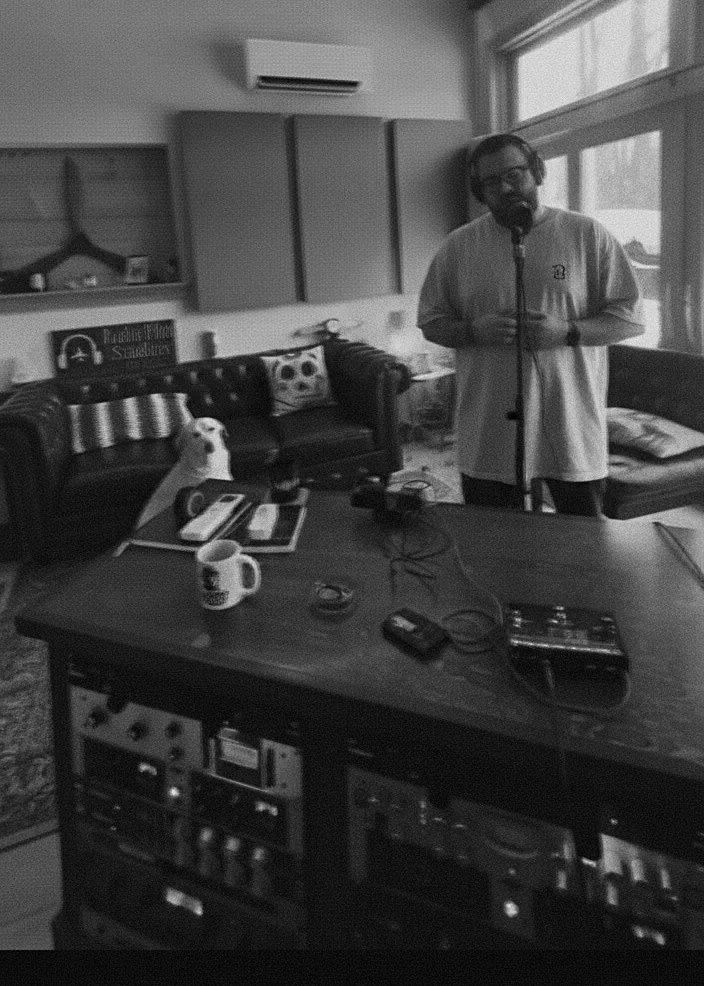
Before the marketing and the analytics, there was the creative. I have over 30 years of experience in music, painting, and comedy.
People often ask how the creative background fits with the highly analytical world of healthcare growth marketing. It's simple: math tells you where the audience is, but creative is what makes them move. The ability to read a room, write compelling copy, and design an experience that feels human is what makes the marketing convert. My music project, Raw Light, and my creative work at Paraspace are the roots of the tree.
Thirty years of stages taught me what dashboards can't — timing. When a room leans in. When you're losing it. An audience is an audience.
— still true in every ad account I open